Two tenths, a career
There are titles that decide a standings sheet. And then there are careers that titles can’t fully explain.
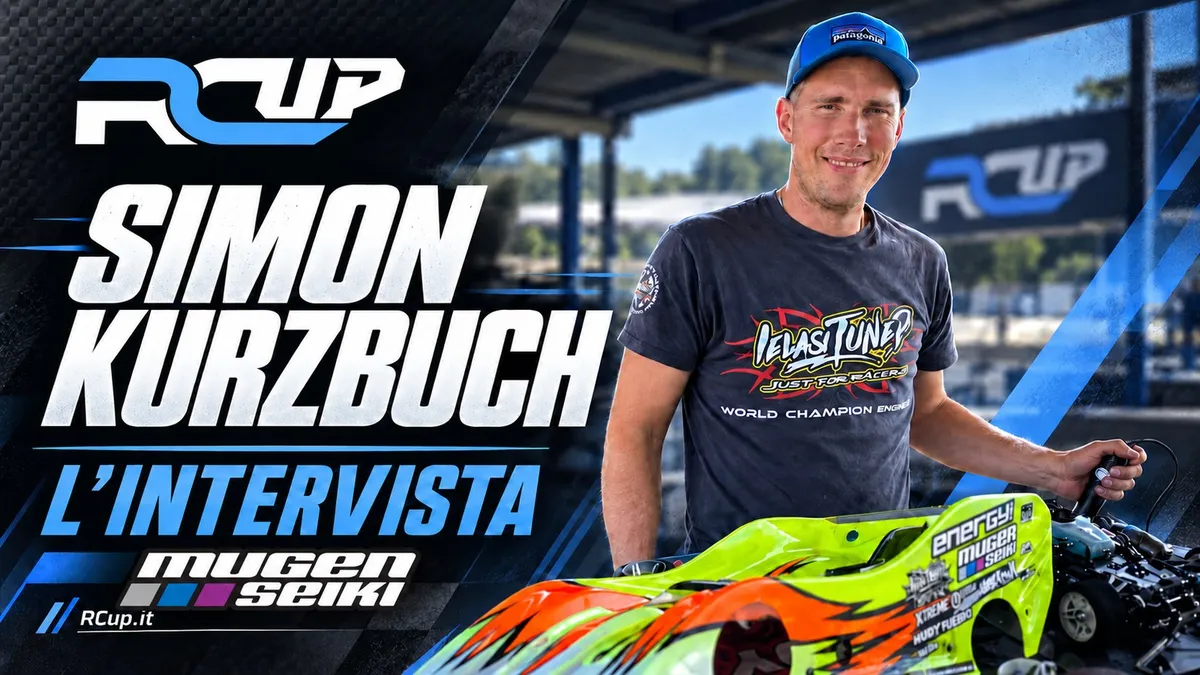
Simon Kurzbuch is the 2015 World Champion — by two tenths. Today he races with Mugen and works alongside Daniele Ielasi, with his father still a few metres below the drivers’ stand.
We talked about results, family, changing brands, MRX7 development and what he’d teach someone who shows up on Sunday with a second-hand car and a handful of spare parts.
What came out is an interview about what remains when those two tenths go the other way — and what remains anyway.
Two tenths don’t define you
Simon, in 2015 you became World Champion by just two tenths of a second. Had those two tenths gone the other way, you would have been exactly the same driver, yet people might have seen you differently. How much do your results tell us about who you are as a racer, and how much never shows up in the standings?
I think results are important because, at the end of the day, racing is about performance, and the results are what people remember. But they don’t tell the whole story.
Winning the World Championship in 2015 together with my father and my brother as mechanics was something very special — the reach of our dream. Two tenths of a second can decide a World Championship, but they don’t suddenly make you a better or worse driver. If those two tenths had gone the other way, I would still have prepared in the same way, made the same decisions during the race and worked with the same people around me.
Of course, I’m proud of the World Championship. But I don’t think one title defines me as a driver. The consistency over many years, the work with my team and the motivation to keep improving — that’s much closer to who I am as a racer.
RCup.it: The title stays. But Kurzbuch points elsewhere: consistency, team, the will to improve. Two tenths decide a Sunday — not a career.
Dad a few metres below the stand
Your father has followed your career from just a few metres below the drivers’ stand. Can you remember a time when he knew how you were feeling before you said a word? After all these years, what can he tell about you simply by watching you drive?
After so many years, my father knows me very well, probably better than I sometimes realise. He has seen me in so many different situations — when everything was going perfectly, when I was frustrated, when I was under pressure or when simply nothing was working.
I think one of the things he can recognise immediately is when I’m comfortable with the car. He can watch the first few laps and already know we are there to give everything.
We went through so many situations — he knows exactly how I’m thinking, how I will react, and for sure that I always want more 😉 We work well together as we can be very direct but also understand that both sides give everything.
For me, having my father there is much more than just having another person helping at the track. He is part of my racing history. A lot of the memories I have from racing are also memories we share together.
RCup.it: Not just a mechanic: shared memory. A few laps are enough for his father to know if the car is “there”.
When control starts to slip
Watching you from the outside, it can seem as though you always have everything under control. Can you take us inside a moment when that control was starting to slip away? What do you actually do to regain your composure while the race is still going on?
It can happen quickly. Everyone has been in this situation — many times I could improve performance from the start of the qualifications or the race. What’s important is to go back to the things you are certain work. From that point you try to improve every part: driver, car, engine performance, mechanic. If you gain only a little bit everywhere, you gain a lot in overall performance. That’s my way of thinking.
RCup.it: No hero panic: go back to what works, then build the advantage piece by piece.
Kurzbuch & Hächler
You and Silvio Hächler shared your student years and an important part of your development in RC racing. What have you learned from him that you probably wouldn’t have learned from just any teammate? And when you’re fighting for the same position, how much room is there for friendship?
It was an amazing time. We were participating in so many races around the world where every race has its own stories from and beside the track. Every race we went to together, we knew we had a strong opponent — it pushed both of us! Room for friendship is always there. It’s like in F1: you never crash with your teammate — with us it’s the same. We have huge respect for each other and we fight for the positions, but if we touch it’s a lose-lose situation.
RCup.it: Rivalry yes, respect more: contact helps nobody. Friendship and fighting can coexist.
From Shepherd to Mugen
After so many years with Shepherd, moving to Mugen meant questioning things you had long taken for granted. For a driver at your level, how difficult is it to go back to asking questions instead of already having the answers? Do you remember the first moment when you truly felt at home with the new car?
Changing manufacturer after so many years was definitely a big step. When you have driven the same car for a long time, you build up an enormous amount of knowledge. You know what to change, what not to touch, how the car reacts and what certain feelings mean.
When you move to something completely different, some of that knowledge doesn’t disappear, but you have to learn how to apply it differently.
For me, that was actually one of the interesting parts. You have to become a beginner again in some areas. You ask questions because you don’t yet know the answer, and you have to be willing to accept that your old solutions aren’t necessarily the best solutions anymore.
I don’t think there was one single moment when I suddenly thought, “Now I’m at home.” It was more a process. Every test day, every race and every setup change gave me another piece of information.
The important moment is when you stop comparing everything with the old car. Once you stop thinking, “With my previous car I would have done this,” and start thinking only about what the new car needs, then you are really starting to work with it rather than against it.
That is when a new car becomes your car.
RCup.it: Home doesn’t arrive in one moment: it arrives when you stop comparing and start listening.
MRX7: driver input
When it comes to developing Mugen’s 1/8 on-road car, where do you feel your input has made the biggest difference? Can you give us a concrete example of feedback you provided that became a change other racers can now benefit from? And how do you judge whether something genuinely improves the car or simply suits your own driving style?
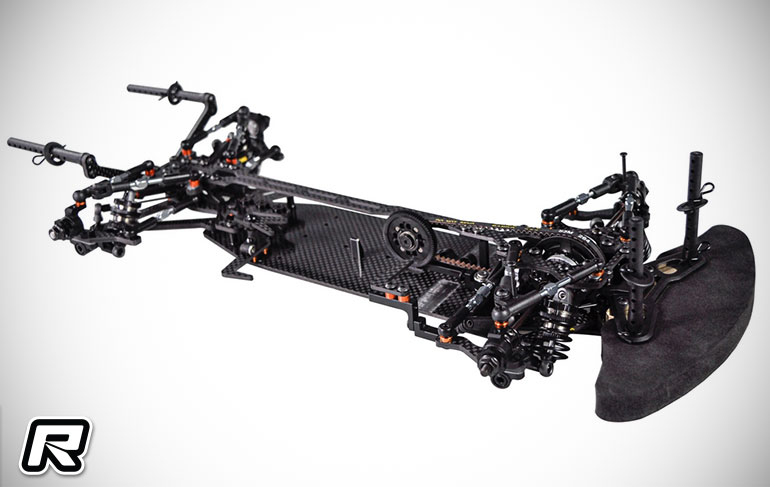
There were definitely parts of the design where I could give my inputs which are now applied in the MRX7. I have intensively tested the chassis options so we could create a platform for every racer’s needs. The MRX7 is winning World Championship titles and makes every hobby driver happy. A true masterpiece.
RCup.it: Few words wasted: chassis tested hard, a platform for everyone — from worlds to hobby.
Ielasi Tuned: respect and expectations
Working with Daniele Ielasi means discussing things you have to feel and interpret while driving. If we could listen in on one of your completely unfiltered conversations in the pits, what would we hear you disagreeing about most? Tell us about a time when you had different ideas and the track settled the argument.
Honestly, the point we probably argue about most is when I apologise because I’m not happy with my own performance. He hates it when I do that. I think that says a lot about our partnership and the way we work together.
We both always want more. We want the best of everything, and we’re only really satisfied when we feel we’ve achieved that. At the same time, there is a lot of respect for each other’s work, and I think that’s what makes the partnership so strong.
When we go testing, I can give him very clear and specific feedback about how I feel the engine is performing, but also about what we see when we analyse the data. We can discuss things openly, challenge each other’s ideas and then let the track give us the final answer.
I think that combination of high expectations, honesty and mutual respect is a big part of why we work so well together.
RCup.it: The most frequent argument? Simon’s apologies. Ielasi hates them — and that says everything about the duo.
Work and racing: no compromises you can control
These days, you have to balance work with a sport where some of your competitors can dedicate much more time to racing. When you arrive at the track less prepared than you would like, can you accept that, or do you still demand exactly the same performance from yourself?
I have accepted that I simply cannot race and practise as much as some of my competitors. That’s part of my situation, and I have learned to work with it. But when it comes to preparing the car, the engine and everything around it, I still demand the highest possible level from myself and my team.
If I feel that the car isn’t properly prepared and, as a result, I can’t show the performance I know I’m capable of on the track, then I’m very hard on myself. I don’t like making compromises in the areas that I can control.
The goal is still the same — to perform at the highest possible level. I just have to be realistic about where I can invest my time and make sure that the preparation I do have is as effective as possible. I may not be able to put in as many hours of driving as others, but when I arrive at the track, I want to know that everything I can control has been done to the highest standard.
RCup.it: Fewer hours yes. Lower standards no: on what he can control, Kurzbuch doesn’t compromise.
Knowing when not to attack
In 1/8 on-road racing, a strong final also comes down to knowing when not to attack. Have you ever let a rival pull away because you were convinced that following them would compromise your own race? How difficult is it to stick with that decision as you watch the gap grow?
Yes, absolutely. Finals are long races with many cars on track and many pit stops. In the end we always try to maximize our performance; judging risks and rewards is key. Trying to overtake your opponent three laps before a pit stop makes no sense.
RCup.it: Race IQ in one line: not every overtake is worth it — especially three laps before a pit stop.
Tyre additive: finally left behind
Here’s an uncomfortable question: is there a practice in top-level RC racing that you’ve accepted to stay competitive, even though you personally disagree with it? Something we keep treating as normal simply because “that’s how it’s always been done”?
Tyre additive was definitely one of those things. I’m really happy for the RC scene that we have moved away from it. The ENS format played an important role in that development and showed that handout tyres could work very successfully at a high level.
I think that was a very important step for our class and for the whole racing scene. And personally, I’m happy that we have moved in this direction. It makes the racing simpler, more transparent and, in my opinion, better for everyone.
RCup.it: One of the few “norms” Simon is glad to leave behind: less additive, more racing.
Advice for Sunday racers
With RCup.it, we want to bring the champions closer to the people racing on Sundays, perhaps with a second-hand car and just a handful of spare parts. If we invited you to spend a day in the pits with one of them, what would you want to teach them before even touching the setup? And what do you think that day might remind you of?
Spend your money on the things that actually give you performance. You don’t need the newest version of everything. Instead, invest your money where it can genuinely improve your race pace.
I also think it’s much more important to build good consistency than to chase one incredibly fast lap. You don’t need to completely change your setup after every run. First, learn how your car behaves and understand what it is telling you. Work on your racing lines, braking points and driving technique. Of course the base there is a good base setup you can find for every brand online.
Once you have that foundation and can drive the car consistently, then start making small changes to improve the handling. Make one change at a time and understand what it does.
In the end, a car that is easy to drive consistently for an entire run will usually be much more valuable than a car that is capable of one very fast lap.
Also important: maintenance of your car and accurate setup work.
RCup.it: A champion’s message to Sunday racers: less shopping, more consistency. One change at a time.
RCup.it
Maybe the truest line in the whole interview is also the most practical:
once you stop comparing the new car with the old one, it finally becomes yours.
Because behind the World title, the MRX7 and Ielasi Tuned, something the two tenths can’t tell remains: consistency, respect on track, and work on what you can control.
Less myth of two tenths. More craft of a champion.